世界の溶接人材をめぐる課題と規格の役割 ― アメリカ溶接協会(AWS)CEO キャリー・チェン氏に聞く ―


*The English version follows the Japanese text.
アジアにおける溶接人材育成の課題は、特有のものなのだろうか。
アメリカ溶接協会(AWS)CEOのキャリー・チェン氏は「世界的な構造課題である」と語った。高齢化の進行、若年層の溶接分野への参入減少に加えて、インフラ、製造業、エネルギー分野からの需要拡大が重なり、世界の溶接産業は大きな転換期を迎えている。こうした状況は、日本およびアジア各国が現在直面している現実と一致している。
2025年9月8日、FABTECH 2025の開幕日。『Welding Promenade』編集部は、米国シカゴのマコーミック・プレイス・コンベンションセンターで開催されたAWSオープニングセッションおよび年次ビジネスミーティングに出席し、チェン氏に話を聞いた。
(「Welding Promenade vol.46」2026年3月2日発刊号より)
熟練溶接技能者の世界的不足
米国では、多くの国と同様に、熟練した溶接技能者の不足が深刻な課題となっている。経験豊富な技術者の多くが引退期を迎える一方で、若い世代の業界参入は十分とは言えない。その結果、製造業、インフラ整備、エネルギー産業など、溶接に大きく依存する産業ではリスクが高まりつつある。
アメリカ溶接協会(AWS:American Welding Society)は、この状況を「Welding Workforce Data」イニシアチブを通じて継続的に調査している。業界の予測によれば、米国だけでも2029年までに32万人以上の新たな溶接専門人材が必要になるとされており、これは年間およそ8万人の新規人材を確保する必要があることを意味する。チェン氏は、この規模の需要に対応するためには、産業界、教育機関、そして専門団体の緊密な協力が不可欠であると強調している。
次世代のための教育とキャリアパス
若い世代を惹きつけ、支援するために、AWSは幅広い教育プログラムを展開している。これには、学生向けの無料会員制度、奨学金プログラム、学校や訓練機関とのパートナーシップなどが含まれる。これらの取り組みは、質の高い教育へのアクセスを拡大するとともに、溶接業界におけるキャリアパスを明確にすることを目的としている。
特に「Student Chapters」は重要な役割を果たしており、学生が実際の業界の取り組みに触れる機会や、経験豊富な専門家と交流する機会を提供している。
さらにAWSは、デジタル学習教材やアウトリーチプログラムの拡充も進めており、地域を問わず、また十分な教育機会に恵まれていないコミュニティを含め、すべての学生が溶接教育や訓練に参加できる環境づくりを目指している。
イノベーション、技術、そして規格の重要性
急速な技術革新は、多くの産業分野における溶接プロセスを大きく変えつつある。ロボティクス、自動化技術、さらにはAM(積層造形:Additive Manufacturing)などが、産業用途においてますます活用されている。
しかし、技術革新だけでは十分ではない。こうした革新は、体系的な教育と明確に定義された規格によって支えられる必要がある。
そのためAWSは、企業が新技術を安全かつ効果的に導入できるよう、業界主導の規格、認証制度、技術ガイドラインの策定に注力している。これには、溶接技能者が適切な訓練を受けること、そして新しい材料や工法が導入された際にCertified Welding Inspectors(認定溶接検査技術者)が品質評価を適切に行える体制を整えることが含まれる。
イノベーションと安全性、信頼性、一貫性のバランスを保つことは、グローバルなサプライチェーンにおける信頼を維持するために不可欠である。
グローバル・フレームワークとしてのAWS規格
AWS規格は米国だけでなく、世界各国の政府、企業、大学などでも広く採用されている。複数地域の専門家の協力のもとで策定されたこれらの規格は、その明確さ、厳密さ、そして実務への適用性により高く評価されている。
AWSは、国際規格を共有された責任として捉えている。品質と安全のための一貫した基準は、溶接が行われるあらゆる場所において、不可欠だからである。
つまり、規格は国境を越えた技術協力や人材の流動性を可能にする共通言語として機能している。
アジアおよびインド太平洋地域への視点
AWSはアジアおよびインド太平洋地域を、世界産業の成長と革新の重要な中心地と位置付けている。この地域の発展において溶接は重要な役割を果たしており、人材育成と教育が重要な課題となっている。
政府、教育機関、産業界とのパートナーシップを通じて、AWSは人材育成と国際規格との整合性を促進する取り組みを支援している。
アジアの力は、世界の溶接エコシステムに不可欠である。地域を越えた協力が労働力不足の課題に対応すると同時に、技術的卓越性の向上にもつながるだろう。
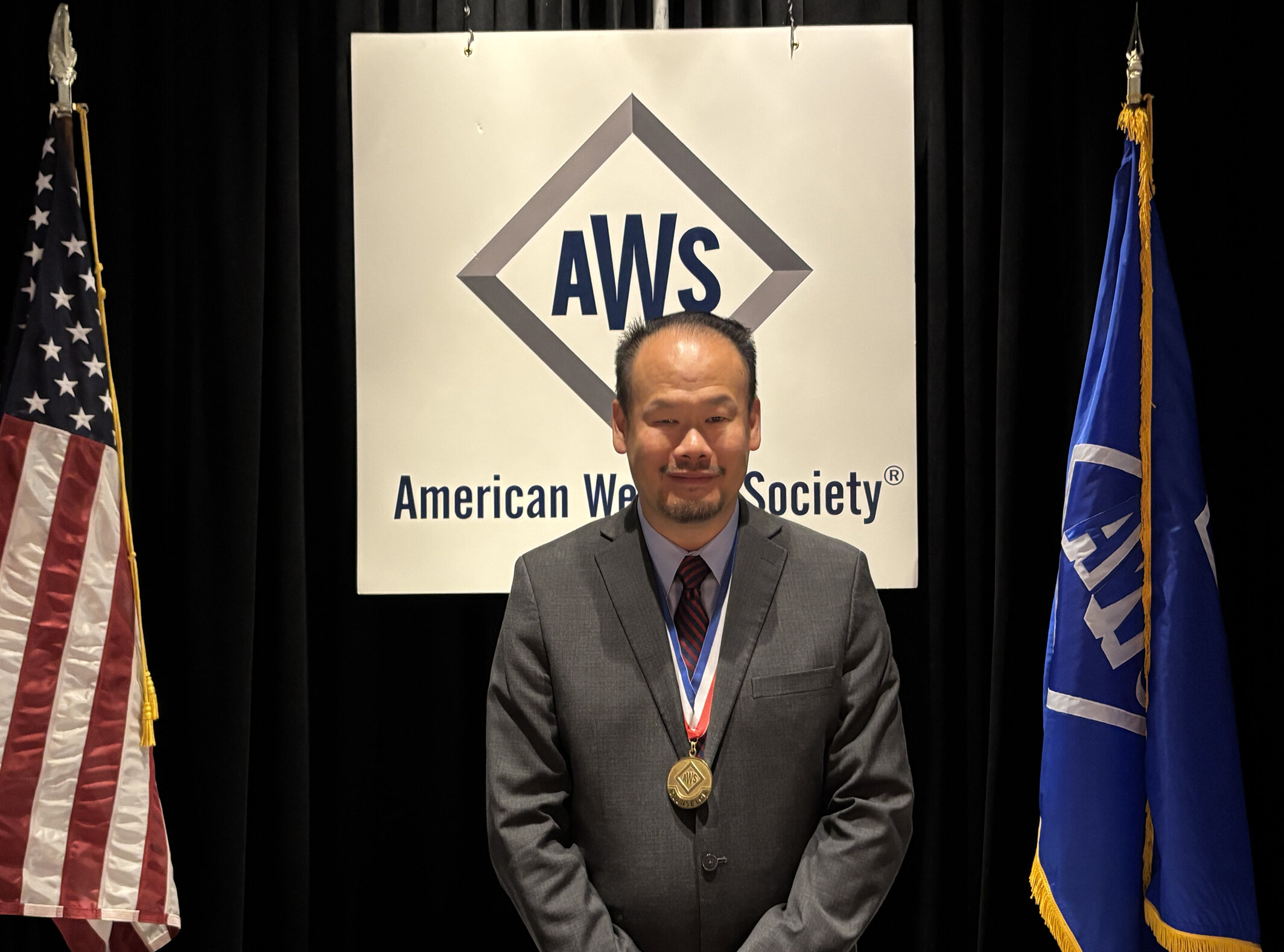 Carey Chen (Chief Executive Officer and Executive Director, AWS)
(文責・「Welding Promenade」編集部)
The Global Welding Workforce Challenge and the Role of Standards
-- Insights from AWS CEO Carey Chen on Human Resource Development and International Collaboration --
Are the challenges surrounding welding workforce development in Asia truly unique to the region?
On September 8, 2025--the opening day of FABTECH 2025--the editorial team of Welding Promenade attended the AWS Opening Session and Annual Business Meeting held at the McCormick Place Convention Center in Chicago, where we conducted an interview with Carey Chen, Chief Executive Officer of the American Welding Society (AWS).
According to Chen, the shortage of skilled welding professionals is not a regional issue, but a global structural challenge. An aging workforce, declining participation among younger generations, and growing demand from infrastructure, manufacturing, and energy sectors are reshaping the welding industry worldwide. These conditions closely mirror the realities currently faced in Japan and across Asia.
This article examines how AWS understands the global welding workforce shortage and explores the roles of education, certification, and international standards in addressing this challenge. By introducing a global perspective, it aims to provide a reference point for re-evaluating the current state of welding human resource development and technical collaboration in Asia.
(From Welding Promenade, Vol. 46, published March 2, 2026)
A Global Shortage of Skilled Welding Professionals
In the United States, as in many other countries, the shortage of skilled welders has become a critical issue. Large numbers of experienced professionals are approaching retirement, while too few young people are entering the trade. As a result, industries that rely heavily on welding--such as manufacturing, infrastructure development, and energy--are facing increasing risks.
AWS monitors this situation through its Welding Workforce Data initiative. Industry projections indicate that the United States alone will require more than 320,000 new welding professionals by 2029, equivalent to filling approximately 80,000 positions per year. Chen emphasizes that responding to this scale of demand requires close cooperation among industry, educational institutions, and professional organizations.
Education and Career Pathways for the Next Generation
To attract and support younger generations, AWS has developed a broad range of educational initiatives, including free student memberships, scholarship programs, and partnerships with schools and training centers. These efforts are designed to expand access to high-quality education and to clarify career pathways within the welding industry.
Student Chapters play a particularly important role by offering hands-on exposure to industry practices and opportunities to connect with experienced professionals. In parallel, AWS is expanding digital learning resources and outreach programs to ensure that students in all regions--including underserved communities--can participate in welding education and training.
Innovation, Technology, and the Importance of Standards
Rapid technological change is transforming welding processes across industries. Robotics, automation, and additive manufacturing are increasingly integrated into industrial applications. Chen notes, however, that innovation alone is not sufficient; it must be supported by structured education and clearly defined standards.
AWS focuses on developing industry-driven standards, certification systems, and technical guidelines that help companies adopt new technologies safely and effectively. This includes ensuring that welders are properly trained and that Certified Welding Inspectors are equipped to evaluate quality when new materials and methods are introduced. Balancing innovation with safety, reliability, and consistency is essential for maintaining trust across global supply chains.
AWS Standards as a Shared Global Framework
AWS standards are widely adopted not only in the United States but also by governments, companies, and universities around the world. Developed collaboratively by experts from multiple regions, these standards are recognized for their clarity, rigor, and practical applicability.
Chen views international standards as a shared responsibility. Wherever welding is performed, consistent benchmarks for quality and safety are essential. In this sense, standards function as a common language that enables cross-border technical collaboration and workforce mobility.
Perspectives on Asia and the Indo-Pacific Region
AWS sees the Asian and Indo-Pacific region as a major center of industrial growth and innovation. Welding plays a central role in this development, making human resource development and education critical priorities.
Through partnerships with governments, academic institutions, and industry leaders, AWS supports workforce training and alignment with international standards. Chen emphasizes that collaboration across regions can address workforce challenges while strengthening technical excellence. In this context, Asia is not an outlier, but an integral part of the global welding ecosystem.
(Prepared by the Welding Promenade Editorial Team)

 SNSシェア